Golda Eichen, BA
Medical student
Albert Einstein College of Medicine
Cherry Hill, New Jersey, United States
Yolanda N. Pham, MD, MPH
Resident Physician
Montefiore Medical Center/Albert Einstein College of Medicine
Bronx, New York, United States
Sharon Bushi, MD
Assistant Professor, Brain Injury Unit
Burke Rehabilitation Hospital
White Plains, New York, United States
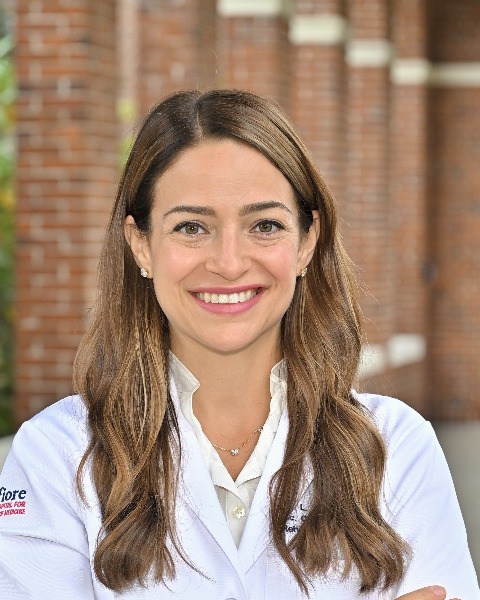
Erika L. Trovato, DO, MS (she/her/hers)
Associate Chief Medical Officer, Program Director, Brain Injury Fellowship
Burke Rehabilitation Hospital
White Plains, New York, United States
Ashley Covato, DO
Doctor
Westchester Medical Center
sleepy hollow, New York, United States
A 73-year-old female with right basal ganglia infarct with debilitating delusions and paranoia, found to have folie a deux (shared delusional disorder).
The patient presented with acute onset left-sided facial droop and weakness, which she and her sister attributed to being tazed by their landlord. Imaging showed acute right basal ganglia infarct. She was medically managed and discharged to acute rehab for residual weakness. During rehab course, the patient experienced severe paranoia, anxiety, and delusions, including that her landlord was visiting and threatening her. This negatively impacted her progress as she occasionally refused therapy due to these delusions. Psychiatry was consulted, and patient’s sister provided collateral. She stated that she previously shared her delusions, but now that they were separated, she realized that they never occurred. They were suspected to have folie a deux with the patient being the inducer. The patient was started on aripiprazole, which significantly improved paranoia and increased motivation and ability to engage in therapy. She had significant functional improvements during her acute rehab course.
Folie a deux, or shared delusional disorder, is a rare disorder in which two or more individuals share the same psychotic beliefs, and is more common in people in close relationships and/or who are socially isolated from others. It is often undiagnosed and may be treated as individual delusional disorder. It can also be difficult to obtain collateral as the source may be the partner who shares the delusion. In inpatient rehab, undiagnosed psychotic disorders can negatively impact the patient’s ability to meaningfully participate in their recovery and rehabilitation. Treatment includes separating involved parties, which may require limiting visitors.
When patients present with rare psychiatric conditions, such as folie a deux, that limit therapy, working closely with Psychiatry helps facilitate optimal functional progress.