Carolina Mallar, BS
Medical Student
University of Miami
Miami, Florida, United States
Daniel S. Marte, MD
Resident Physician
Icahn School of Medicine at Mount Sinai
New York City, New York, United States
Aliza M. Perez, DO
Resident Physician
The Mount Sinai Hospital- NYC
new york city, New York, United States
Oranicha Jumreornvong, MD
Resident physician
Mount sinai hospital
New York, New York, United States
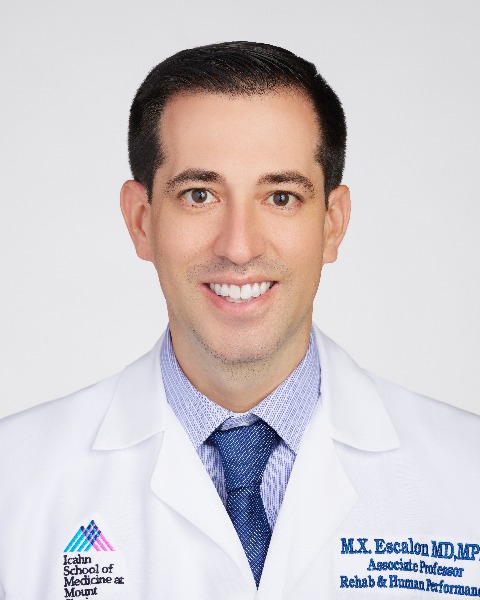
Miguel X. Escalon, MD
Program Director
Icahn School of Medicine at Mount Sinai
NY, New York, United States
Moyamoya Disease secondary to Alport Syndrome
Case Description:
A 40-year-old woman with a history of pre-eclampsia presented to the Emergency Department with a 5-day history of blurry vision and headaches, alongside findings of papilledema and hypertension. Initial imaging revealed a lesion in the left cerebral hemisphere with demyelination and significant mass effect. Her condition worsened, requiring intubation, and transfer to the neurological intensive care unit. Follow-up MRI showed infarctions in the right parietal lobe, bilateral anterior cerebral arteries, and the left thalamus. Digital subtraction angiography revealed severe stenosis to occlusion of the right terminal internal carotid artery, moyamoya-like changes in the right middle cerebral artery distribution, a left fetal-type posterior cerebral artery, and a diminutive left A1 segment. Renal biopsy confirmed Alport syndrome with associated chronic thrombotic microangiopathy. Imaging confirmed a diagnosis of Moyamoya disease.
Discussions: This case uniquely illustrates the rare combination of Alport syndrome and Moyamoya disease. We hypothesize that underlying vascular complications associated with Alport syndrome contributed to the development of Moyamoya disease. This novel connection, not well-documented in the literature, highlights the complexity of diagnosing and managing such overlapping conditions. Moyamoya disease is known to present with variable outcomes depending on severity and timing of intervention; however, proper management and regular follow-up can significantly improve patient outcomes. In this case, recognizing the atypical presentation allowed for tailored acute rehabilitation, leading to substantial functional improvement before discharge. The patient's multifocal infarctions, absence of optic nerve edema, and normal autoimmune and protein studies further complicated the diagnosis, underscoring the need for comprehensive evaluation.
Conclusions: This case highlights the challenging intersection of Moyamoya disease with Alport syndrome, emphasizing the importance of thorough evaluation and early recognition in patients with multi-system involvement and unexplained cerebrovascular events. Multidisciplinary management and tailored rehabilitation are crucial for optimizing outcomes in such rare and complex presentations.