Virgilio A. Perez, MD
Medical Doctor
Rehabilitek
Dominicanos Ausentes, Distrito Nacional, Dominican Republic
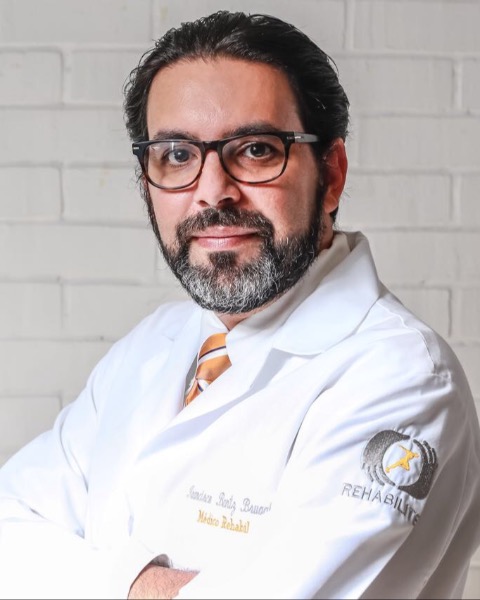
Francisco Bentz Brugal, MD
Medical Doctor
Rehabilitek
Arroyo Hondo, Distrito Nacional, Dominican Republic
Carla Lee, MD
Medical Doctor
Rehabilitek
Distrito Nacional, Distrito Nacional, Dominican Republic
Isabella Nuñez, MD
Medical Doctor
Rehabilitek
Arroyo Hondo, Distrito Nacional, Dominican Republic
Alfredo Forteza, MD
Medical Doctor
Rehabilitek
Arroyo Hondo, Distrito Nacional, Dominican Republic
A 40-year-old male presented with persistent shoulder pain, limited range of motion, and difficulty with activities of daily living (ADL) and instrumental activities of daily living (IADL). An MRI confirmed a SLAP lesion (Type I), partial supraspinatus muscle tear, and tendinosis of the long head of the biceps, subscapularis, and infraspinatus. This case highlights the use of radial extracorporeal shockwave therapy for a patient unresponsive to conventional rehabilitation post-shoulder arthroscopy. The therapy aims to enhance tissue regeneration by improving blood flow, reducing inflammation, stimulating collagen production, and targeting muscles to enhance the kinetic chain and promote recovery. The DASH questionnaire and VAS are used to objectively measure functional improvements and pain reduction. While 2 sessions have been completed, ongoing evaluations will determine the therapy's effectiveness in achieving regenerative outcomes.
Case Description: The patient underwent shoulder arthroscopy, including tendon repairs, biceps tenodesis, capsulorrhaphy, and acromioplasty. After surgery, he completed 10 weeks of physical therapy, 2 weeks of electromagnetic therapy, and 2 weeks of compressive therapy with minimal symptom improvement. The DASH questionnaire and VAS for pain indicated ongoing impairment. Due to slow progress, radial shockwave therapy targeting muscles was initiated to improve the kinetic chain and muscle recovery. Two of four planned sessions are complete, with DASH and VAS assessments scheduled before each weekly session to track progress.
Discussions:
Conclusions: The early application of radial shockwave therapy, specifically targeting muscles to enhance the kinetic chain, shows promise in promoting functional recovery and improving movement in patients with persistent post-operative shoulder dysfunction. By focusing on muscle recovery and coordination, this approach may help restore the dynamic stability and movement patterns essential for daily activities. The objective assessments with the DASH questionnaire and VAS provide valuable insights into the therapy's effectiveness.